How to prepare a Pokémon card for PSA grading
What graders actually look at, how to give your card its best shot, and why a clean, flat card can mean a higher grade.
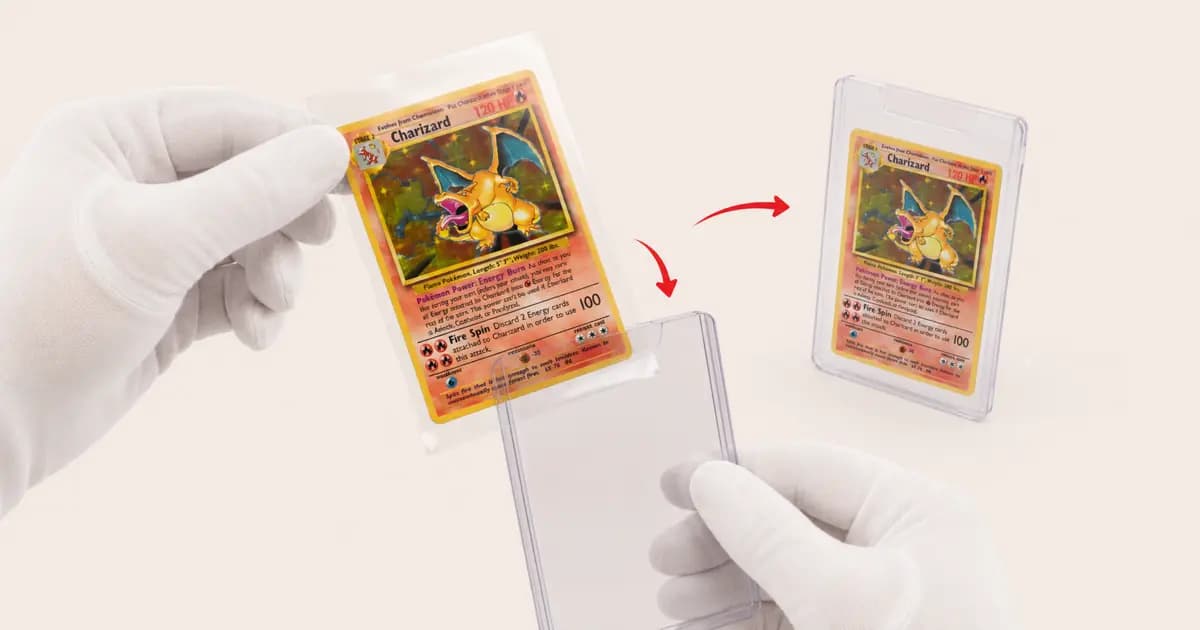
Grading rewards presentation. Two identical cards can get different grades if one is clean and flat and the other is dusty and slightly warped. Here's how to give yours the best possible chance before it goes to PSA.
What graders look at
- Centring: how even the borders are, front and back.
- Corners: sharp vs. soft or dinged.
- Edges: clean vs. whitened or chipped.
- Surface: scratches, print lines, dents, dirt and gloss.
You can't change centring or rebuild a corner. But surface and flatness are often improvable, and that's where preparation pays off.
A simple pre-grading checklist
- Clean the surface of dust, fingerprints and residue (carefully, see our cleaning guide).
- Check flatness. A card that sits flat photographs better and avoids "surface" penalties from bowing.
- Inspect under angled light for haze or foil scuffs you might have missed.
- Sleeve it properly for shipping, penny sleeve plus a semi-rigid holder.
Should you restore before grading?
Restoration and grading are different things. Reputable grading rewards a card that's clean and flat; it does not reward alteration that misrepresents the card. We stay firmly on the right side of that line: we clean, flatten, de-bend and revive foils, we never rebuild, recolour or hide damage.
If your card is dirty or warped, a careful restoration pass before submission can genuinely help. Start an order and we'll tell you honestly what's achievable.
Related articles
- PSA vs CGC vs BGS: which grading company in 2026?Three of the four big graders now share one owner, PSA's cheap tiers are paused, and there's an antitrust suit in progress. The state of Pokémon card grading in 2026, with real numbers.
- Should you clean or restore a card before grading?When cleaning and restoration help a Pokémon card's grade, when they don't, and where the honest line is between conservation and altering a card.
- How to safely ship Pokémon cards for grading (or restoration)A practical packing guide for mailing valuable Pokémon cards without bends, scratches or lost parcels, sleeves, toploaders, cardboard and tracking.
Guides & tips
PokéRestore →