How to clean Pokémon cards safely (without ruining them)
A careful, step-by-step guide to removing dirt, grime and residue from Pokémon cards before grading, and the mistakes that damage cards for good.
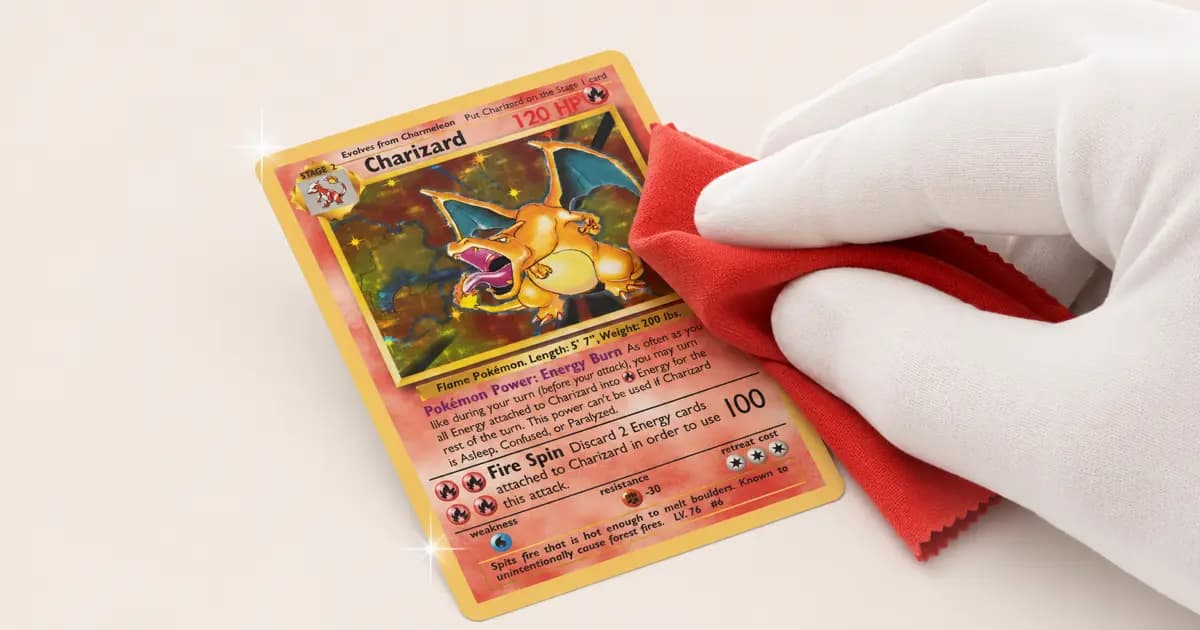
Cleaning a Pokémon card sounds simple, but it's where most collectors accidentally cause damage. The golden rule: less is more. Every pass over the surface has a cost, so you only want to do what's genuinely needed.
Start by assessing the card
Before touching anything, look at the card under bright, angled light. You're looking for:
- Loose surface dirt and dust
- Sticky residue (from sleeves, tape or storage)
- Fingerprints and oils
- Whitening on the edges
Different problems need different approaches. Trying to "clean everything at once" is how scratches happen.
The safe basics
- Work on a clean, soft surface: a microfibre cloth on a flat table.
- Remove loose dust first with a soft, dry brush or gentle air. Never wipe grit across a holo, you'll scratch it.
- For fingerprints, a barely-damp microfibre cloth, wiped in one direction, is usually enough.
- Let the card dry flat, never in direct heat.
What to avoid
- Water on the edges. Cardboard wicks moisture and swells, this causes permanent warping.
- Household chemicals and alcohol. They can lift ink and dull the gloss.
- Erasers on the surface. They remove the top coat along with the mark.
- Aggressive rubbing on holos. The foil layer scratches far more easily than it looks.
When to get help
Deep grime, mould, or residue baked in over years is genuinely risky to remove at home. If the card has real value or sentimental worth, professional restoration uses controlled techniques that protect the surface.
That's exactly what we do, carefully, by hand, with photos before and after. If you'd rather not risk it, start an order and we'll take a look.
Related articles
- Are Pokémon card cleaning sprays safe?'Safe' cleaning sprays for trading cards are everywhere. Based on how cards are actually built, here's the risk they carry and why there's no honest universal formula.
- Mould on Pokémon cards: what to do, and what never toFound mould on a Pokémon card? It's a containment problem, not a cleaning one. The conservation-backed steps to save the card without spreading spores or ruining it.
- Should you clean or restore a card before grading?When cleaning and restoration help a Pokémon card's grade, when they don't, and where the honest line is between conservation and altering a card.
Guides & tips
PokéRestore →