Can PSA detect if a card has been cleaned or restored?
The honest answer, based on PSA and CGC's own standards: yes, grading firms detect cleaning and restoration. Here's how, and why 'undetectable after a few weeks' is a myth.
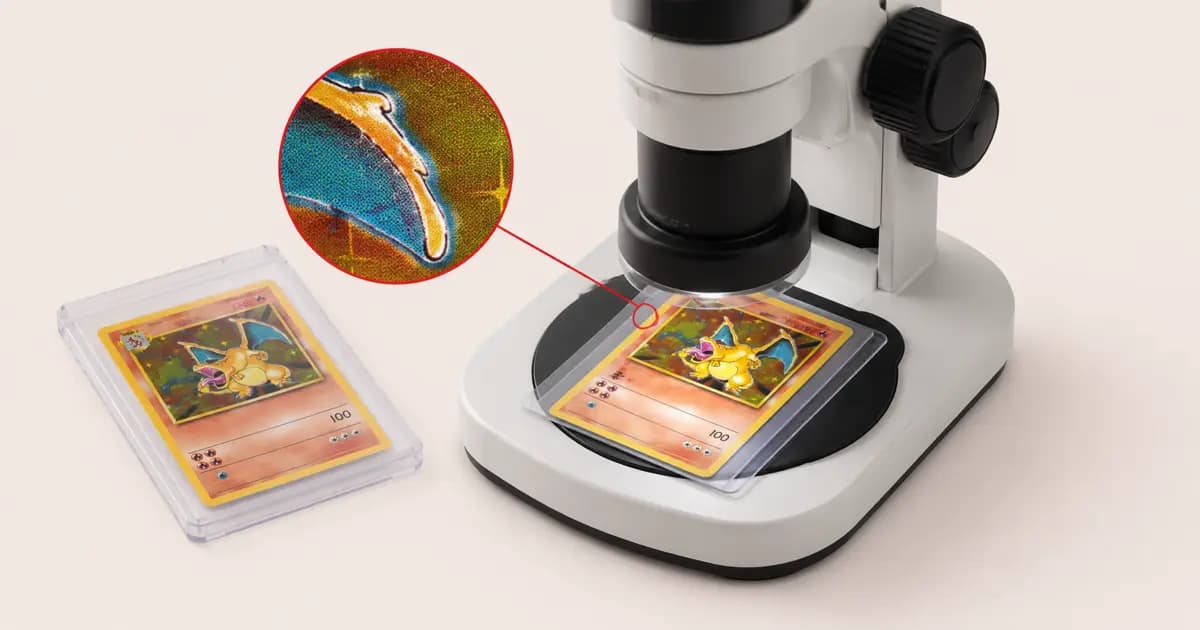
It's the question every collector asks before sending a card in: if I clean or restore this card, will PSA know? Short answer: yes, they can, and they're explicit about it. The longer answer is more useful, because it changes how you should treat a card you plan to grade.
What the graders actually say
PSA and CGC don't grade only the picture on the card. They examine the surface itself, under magnification and angled light, for anything that shouldn't be there. In their own published standards, a foreign substance such as a cleaning spray, wax or polish is treated as evidence that the card was worked on. PSA files this under altered stock; CGC lists chemical cleaning and restoration directly among the things it flags as alteration.
The important part: there is no time period after which a treatment becomes "undetectable." No grading company publishes one, because it doesn't exist. The idea that a wax or spray "settles in" after a few weeks and passes clean is a myth that costs people real money in wasted grading fees and rejected cards.
What they're looking for
A trained grader is reading the surface for signals like:
- A film or sheen that sits differently from the card's original coating
- Residue pooled along edges or in the texture of a holo
- Gloss that looks added rather than original
- Colour or ink that has been touched, rebuilt or recoloured
- Trimmed or rebuilt edges and corners
Some of these get a card marked as altered. Others get it rejected outright, returned in a body bag with no grade at all.
Conservation is not the same as alteration
Here's the distinction that matters. Removing loose dust, lifting a fingerprint, or flattening a warp doesn't add anything to the card, it reveals the card that was always there. That's conservation, and done properly it leaves nothing for a grader to find.
Adding material, waxing a holo, recolouring print or trimming an edge is alteration. That changes the card, and that's what gets detected and penalised.
The line between the two is exactly where an honest restorer has to work.
How we handle it
This is why every card we restore carries one mandatory choice, and we make you pick it up front:
- Grading-safe. Conservative, conservation-grade work only. No products or coatings that a grader would flag. The results are more subtle, but the card stays gradable and PSA won't mark it altered. This is the right choice for anything you plan to send in.
- Full. Maximum aesthetic restoration using every technique we have, for private collections and display. It looks the best it possibly can, but a grader will detect the work, so this is for cards you're keeping, not grading.
We don't blur that line or pretend a "full" treatment can slip past PSA. It can't, and anyone telling you otherwise is guessing with your card.
The takeaway
If you're grading, treat "will they detect it?" as already answered: assume yes. Stick to conservation, keep everything reversible, and don't let anyone put a product on the card that you couldn't honestly declare.
Not sure which side of the line your card sits on? Start an order and we'll assess it first, or read should you clean or restore a card before grading? for the full breakdown.
Related articles
- Should you clean or restore a card before grading?When cleaning and restoration help a Pokémon card's grade, when they don't, and where the honest line is between conservation and altering a card.
- PSA vs CGC vs BGS: which grading company in 2026?Three of the four big graders now share one owner, PSA's cheap tiers are paused, and there's an antitrust suit in progress. The state of Pokémon card grading in 2026, with real numbers.
- Are Pokémon card cleaning sprays safe?'Safe' cleaning sprays for trading cards are everywhere. Based on how cards are actually built, here's the risk they carry and why there's no honest universal formula.
Guides & tips
PokéRestore →